Friedrichsbad Baden Baden
Baden-Baden's historic 1877 Roman-Irish bathhouse above first-century Roman ruins: a UNESCO-listed 17-station bathing ritual unchanged in nearly 150 years.
Friedrichsbad opened in 1877 and has not meaningfully changed its proposal since. Built in Renaissance style above the ruins of a first-century Roman soldiers’ bath (one of the best-preserved Roman bathing complexes in Baden-Württemberg), the bathhouse continues to operate the Roman-Irish bathing ritual that the Irish physician Dr Richard Barter developed in the 19th century: a 17-station journey combining hot air steam baths, thermal bubble baths, soap brush massage, cream massage, and cold pools in a sequence that the building’s architecture amplifies with appropriate gravity.
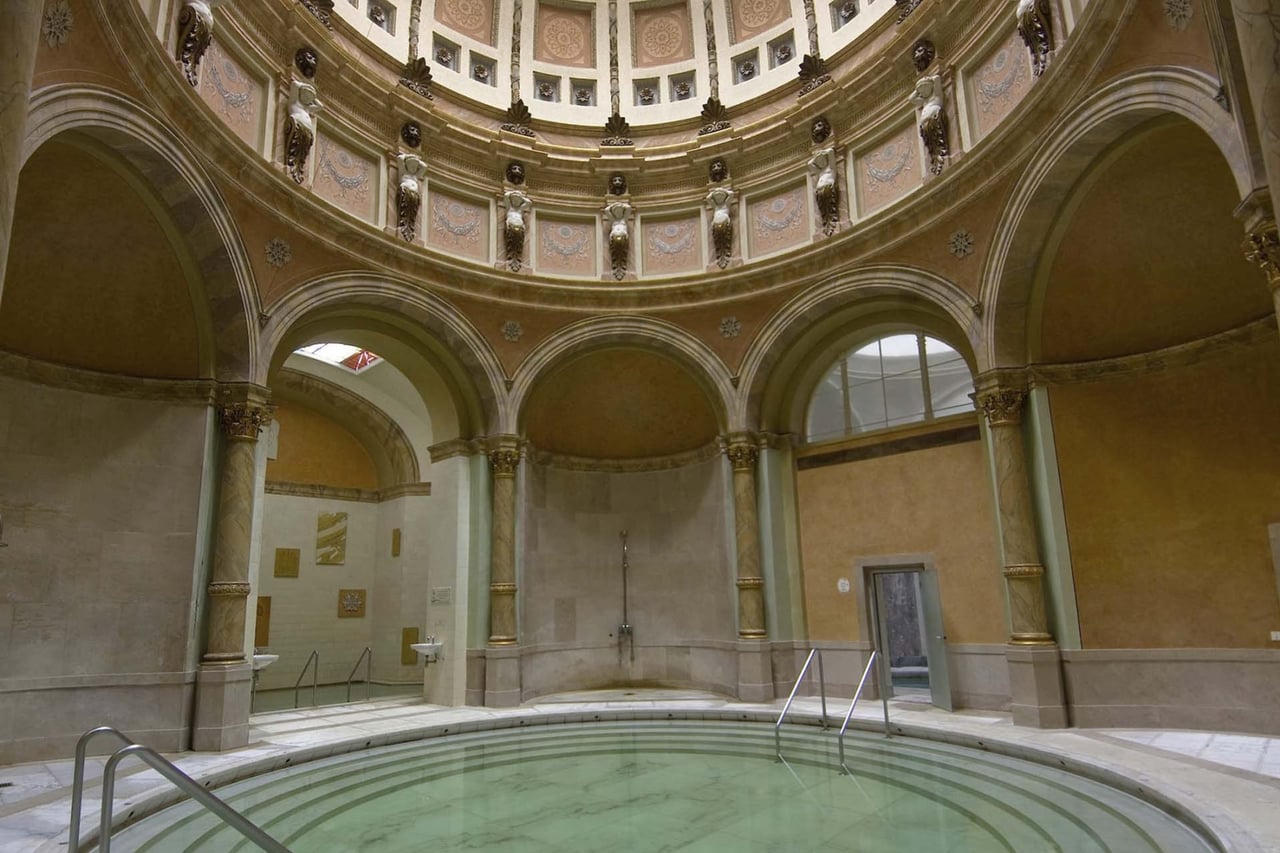
The UNESCO listing is relevant: the exterior and primary interiors look substantially as they did on opening day, which means the building contributes as much to the experience as the water does. Domed halls, Roman-revival decorative stonework, and a scale that makes modern wellness facilities feel temporarily inadequate: Friedrichsbad is a reminder that the 19th century took the bath seriously as an architectural subject.
The nudity requirement (mixed bathing, with brief gender-separated exceptions on certain days) is the detail that stops some visitors at the entrance and turns others into regulars. It is, in practice, a natural consequence of the building’s design: there is nowhere to bring the habitual props of the self-conscious, and the marble surroundings tend to produce a democratic calm.
Mark Twain wrote about Friedrichsbad, noting that after the 17-stage experience one forgets one’s own name for approximately ten minutes. He did not think this a problem.
Neither do most guests.