
Greece
Greece has more inhabited islands than the rest of the Mediterranean combined, and the islands are where the country becomes its better self. Athens is unavoidable — and Anafiotika at dawn is one of Europe's great fifteen-minute experiences — but the country a returning traveller plans around is the archipelago: roughly 230 islands with permanent populations, six distinct regional cuisines, and weather windows that stagger across spring and autumn in ways the Athens-only itinerary misses entirely.
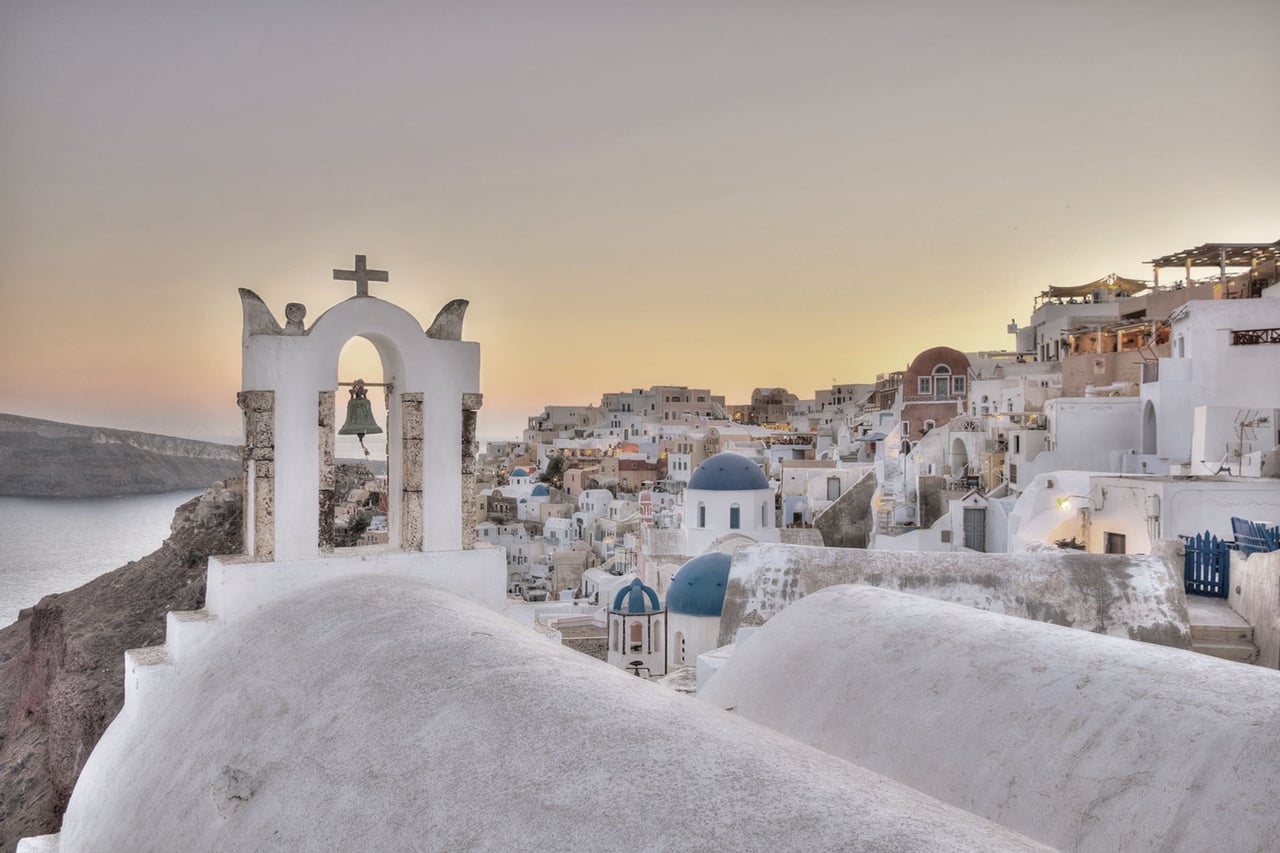
Santorini and Mykonos do most of the headline work and have, frankly, paid for it in over-tourism since about 2017. The more interesting cycle is the lesser Cyclades — Folegandros, Sifnos, Amorgos — and the Dodecanese: Patmos for stillness, Symi for the harbour, Astypalea for the Volkswagen-funded electric-mobility experiment that is genuinely the most interesting energy transition story in the Aegean. The Sporades and the Northern Aegean (Lesvos, Chios) are where Greek travellers go themselves, which is a signal worth heeding.
The luxury map has matured. Amanzoe in the Peloponnese remains the country's reference for serious quiet; Canaves Oia and Katikies still hold the Santorini caldera at a defensible standard. But the more interesting cases are the smaller properties — Perivolas on Santorini, Onar in Zagori, Eumelia in Laconia — that publish water and waste figures and are run by founders rather than groups. Eumelia's biodynamic farm, near Sparta, has been carbon-neutral certified longer than most European hotels have been talking about it.
The case for shoulder season here is now overwhelming. April and October give you 20°C days, swimmable seas in the south, and the local taverna-and-bakery rhythm before or after the cruise-ship months. May and September are the country at its most considered: open kitchens, full ferry timetables, sunset light that justifies the postcard cliché without the queue for it.
A slower read on Greece.
Worthwhile places in Greece.
Filter by destination, theme, & price.