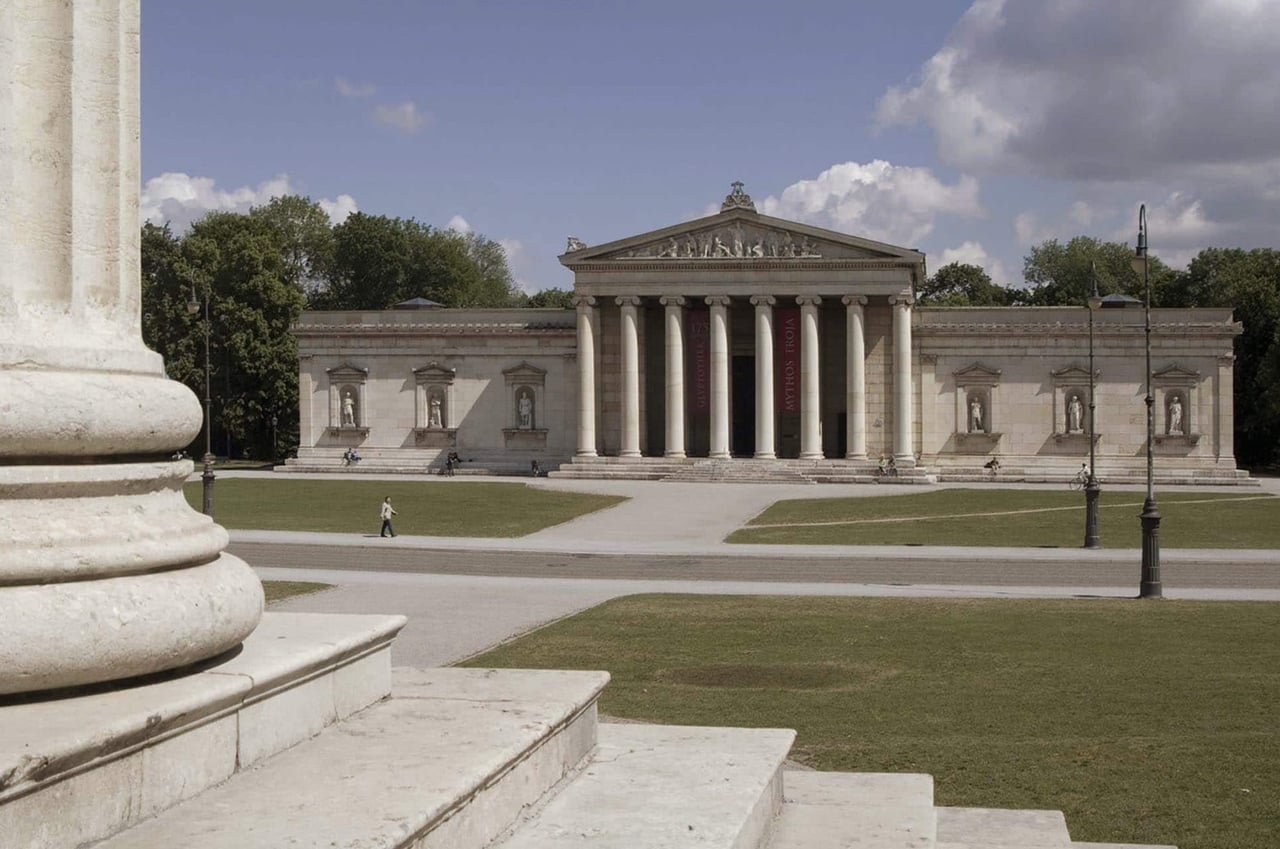
The Glyptothek
Munich's oldest public museum, the Glyptothek houses Greek and Roman sculpture in Leo von Klenze's neoclassical Königsplatz landmark.
The Glyptothek is Munich at its most marble-minded: a temple of ancient sculpture on Königsplatz, where the city decided it could borrow a little Athenian poise and, frankly, pull it off.
It is Munich’s oldest public museum, dedicated to Greek and Roman sculpture and commissioned by King Ludwig I in 1816. Designed by Leo von Klenze, opened in 1830, it houses works from the Archaic, Classical, Hellenistic and Roman Imperial periods. Highlights include the Barberini Faun and the Aegina temple pediment sculptures.
This is a museum for slowing down. Faces, torsos, drapery and mythological fragments sit in rooms that understand negative space, which is more than can be said for many modern galleries. The collection rewards both the classicist and the casual wanderer who simply wants to see what stone can do when a civilisation takes beauty seriously.
Make time for the Glyptothek when Munich’s beer halls and boutiques need a cooler counterpoint. It is calm, exacting and quietly theatrical: ancient bodies, Bavarian ambition, and no need for audio-guide panic.