
Milan Marriott Hotel reopens 317 redesigned rooms after a full renovation
The Milan studio led by Federico Spagnulo reworked rooms, public areas and event spaces around a recurring grid motif.
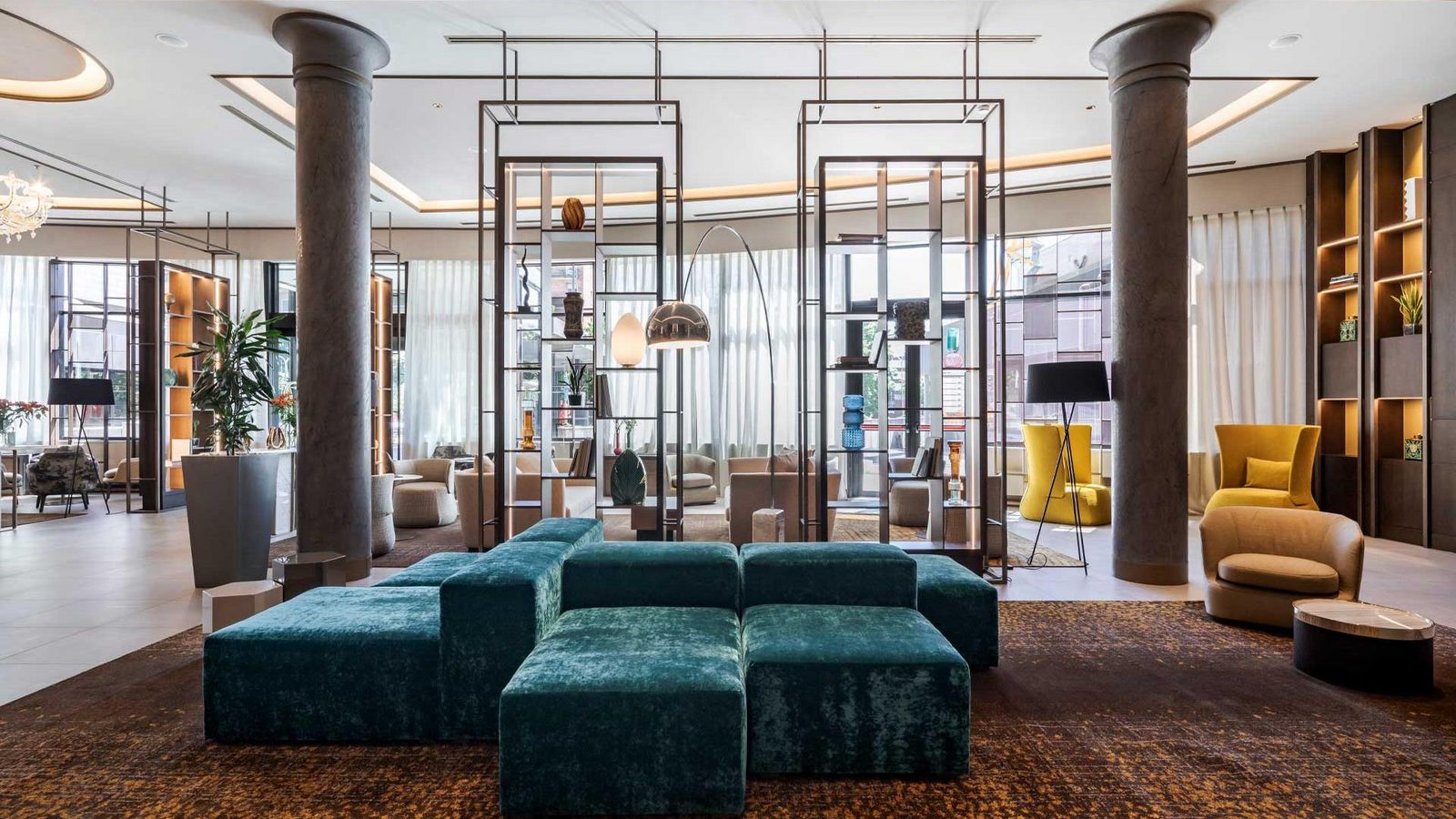

The Milan Marriott Hotel has reopened after an extensive interior renovation led by Spagnulo & Partners, the Milan-based architecture and interior design studio directed by Federico Spagnulo, Alessandra Carbone and Andrea Spagnulo. The project covered all 317 guest rooms, the public areas and the event spaces.
The work establishes a contemporary architectural language built on the property's own history and its long relationship with the city. Spagnulo & Partners describe the guiding idea as architectural continuity, carried through a system of geometries, proportions and materials that shifts across the interiors as their scale and function change.
A grid provides the recurring element throughout. It appears first in the full-height shelving that structures the communal spaces, then becomes a graphic motif worked into handwoven rugs and textiles. As the grid changes scale and material, its precise geometry softens into something more tactile.
In the shared areas the design arranges a sequence of spaces with different degrees of openness and intimacy. Bespoke furnishings define each zone while keeping a visual thread between them. Wood brings warmth and texture that tempers the rigour of the geometry, so the rooms feel composed rather than cold.
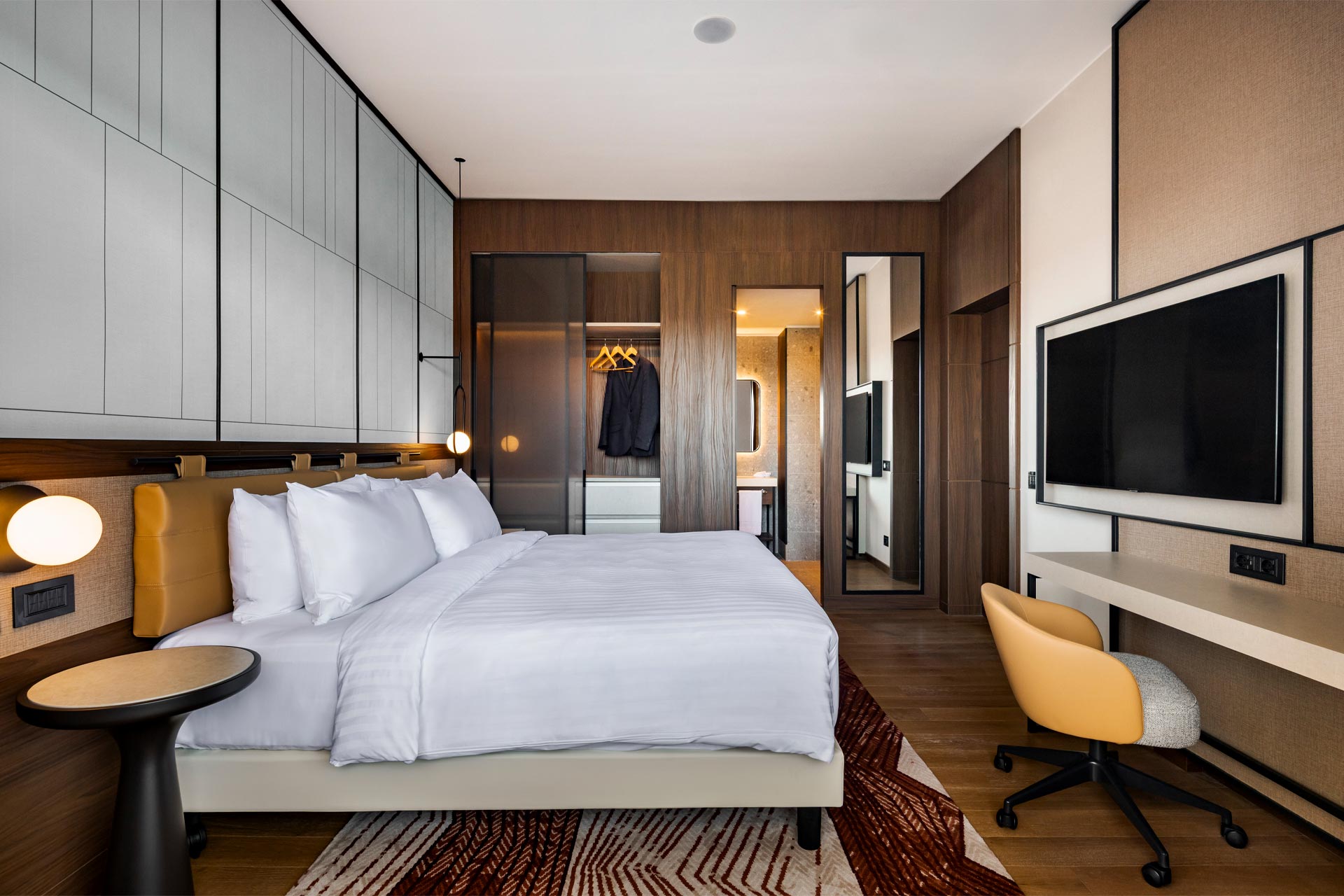
The palette stays predominantly neutral, punctuated by considered colour accents from upholstered furniture and rugs. Those touches characterise each space and give the different areas their own atmosphere, without breaking the calm, restrained tone that runs through the whole hotel.
The same care for proportion and the guest experience shapes the 317 rooms. Clean lines, natural finishes and contemporary furnishings create interiors conceived around comfort and functionality. The studio says the rooms balance the demands of international hospitality with material quality and a distinctive visual identity.
Nothing in the project is off the shelf. From the organisation of the spaces to the furniture design and the lighting scheme, the renovation embodies the studio's bespoke approach, which it roots in the relationship between architecture, materials and the quality of living.
Spagnulo & Partners is a Milan firm, which places this commission close to home. The studio is led by the three principals named above, and its portfolio centres on interiors that treat a building's proportions and materials as the starting point rather than the decoration.
The hotel and its setting
Marriott's presence in Milan now carries this refreshed flagship, while the wider brand continues to grow elsewhere in Europe. We reported that a JW Marriott will open in Kraków in 2027 with 120 rooms and suites, a further sign of the group's expansion into polished city centres.
The Milan property is in a city we have covered at length for its rituals. Our guide to the best coffee shops in Milan and our piece on aperitivo in Milan both map a city where the pause matters, and the hotel's calmer, residential interiors now fit that rhythm.
Marriott's other European and regional properties show the spectrum this renovation is within. Al Wathba by Marriott, a boutique desert resort outside Abu Dhabi, offers 99 rooms and four villas with Bedouin excursions, while the Spa by JW in Edmonton leans on clean contemporary lines and purification treatments.
The result, the studio says, is a hotel that reinvents its character through a restrained design language. The interiors aim to interpret the demands of contemporary hospitality while holding onto a connection with the building's history, rather than erasing it in favour of something fashionable.
The renovation gives the property a unified voice. Where the public areas use the grid at architectural scale, the rooms translate the same idea into natural finishes and simple lines, so a guest moving from the lobby to a room encounters a single, coherent environment.
Visitors planning time around the hotel can extend the stay into the neighbourhood. Our guide to Isola, which we call Milan's most vibrant enclave, covers the district's independent shops and character, and it pairs naturally with a base at the Marriott for travellers who want the city beyond the hotel.
The redesign touches every part of a guest's stay, from arrival to sleeping quarters to gatherings in the event spaces. That completeness distinguishes it from a cosmetic refresh, and it is the measure by which the reopened hotel will be judged once guests begin returning in numbers.
What the redesign does not disclose is its cost or its timeline. Spagnulo & Partners and Marriott have published no budget for the work and no schedule showing how long the property was closed, leaving those details to be filled in only if the hotel chooses to share them later.
The reopening positions the Milan Marriott for the city's next travel season. With 317 refreshed rooms, new event spaces and a coherent interior language across the whole property, the hotel now competes on design as well as location in one of Italy's busiest markets.
Support the content you love — it’s free 🎉
Add Luxa Terra as a preferred source on Google. Our stories will be more likely to appear in Google’s Top Stories. It’s free and supports our team. Thank you!
Add as preferred sourceYou can remove us any time in Google’s source preferences.
Thank you — see you in Top Stories 🎉
Luxa Terra is now one of your preferred sources on Google, so our stories are more likely to appear when you search.
Sources
This briefing is published daily using an AI-powered system crafted by Luxa Terra’s team and finely tuned to meet our editorial standards. While we continuously test and review the output, mistakes can sometimes happen. Tell us if you spot one.
Images: sleepermagazine.com; Sleeper


