
Ras Al Khaimah plans to make 80% of its hotel keys luxury by 2030
The emirate's occupancy fell to 49.3% in the first half of 2026 even as it presses ahead with an 8,000-key luxury pipeline anchored by the delayed Wynn Al Marjan Island casino resort.
Ras Al Khaimah is repositioning itself from a value destination into a premium one, and it has put a number on the ambition. Phillipa Harrison, chief executive of the Ras Al Khaimah Tourism Development Authority, said 80% of the emirate's hotel keys will be premium by 2030, up from 13.3% of current inventory.
The emirate currently has 8,700 hotel rooms. RAKTDA counts around 8,000 keys in its pipeline through 2030, which would take total inventory to roughly 16,000 rooms, nearly double what stands today, with the bulk of the new supply pitched at the top of the market.
What is opening and when
A 258-key Rotana property, Ras Al Khaimah, The Mangroves, is opening this year. Next year adds a 70-key mountain lodge on Jebel Jais, the UAE's highest peak, run under the Mantis brand and named Saij Mountain Lodge, alongside the Wynn Al Marjan Island casino resort.
Wynn Al Marjan Island is a 1,530-key property and the pipeline's single largest addition. Its opening has slipped from an original first-quarter 2027 target to September 2027. The year after that brings a wave of international names to the emirate, including Nobu, Janu, Fairmont, W Hotels, The Unexpected and Four Seasons.
RAKTDA is pairing that supply push with demand-side work: airport infrastructure investment, a new joint marketing deal with Emirates, and an expanded slate of experiences spanning hiking, corporate travel and Indian destination weddings, all aimed at reaching 3.5 million visitors by 2030, a target set against arrivals from key feeder markets still running well below their prior levels.
The awkward part of the timing
The premium pivot is landing against softening near-term performance. Visitor growth in the first half of 2026 was just 2.4%, and that growth came entirely from domestic travel, which surged 47%, while total guest nights fell 29% and revenue per available room dropped by roughly the same margin.
Occupancy fell to 49.3% over the same period. The average daily rate held firm regardless, at AED 705.6, a pattern that tends to precede either a rate correction or a wait for demand to catch up with the supply already committed to the emirate.
Regional geopolitical tensions following the conflict between the United States and Iran have weighed on the near-term numbers. Key international source markets, including Russia, the UK and India, have returned to only 50% to 60% of their prior volumes into the destination.
Harrison expects 2026 to close at around 75% of last year's performance overall. She anticipates a full recovery across the Gulf Cooperation Council by the first quarter of 2027, with slower markets such as Germany not expected to rebound until the fourth quarter of that year.
Where the next guests are meant to come from
With established European feeder markets slow to return, RAKTDA is looking further afield. The authority names China and India as the major untapped growth markets it is now courting, alongside the destination weddings and corporate travel segments it is building out domestically.
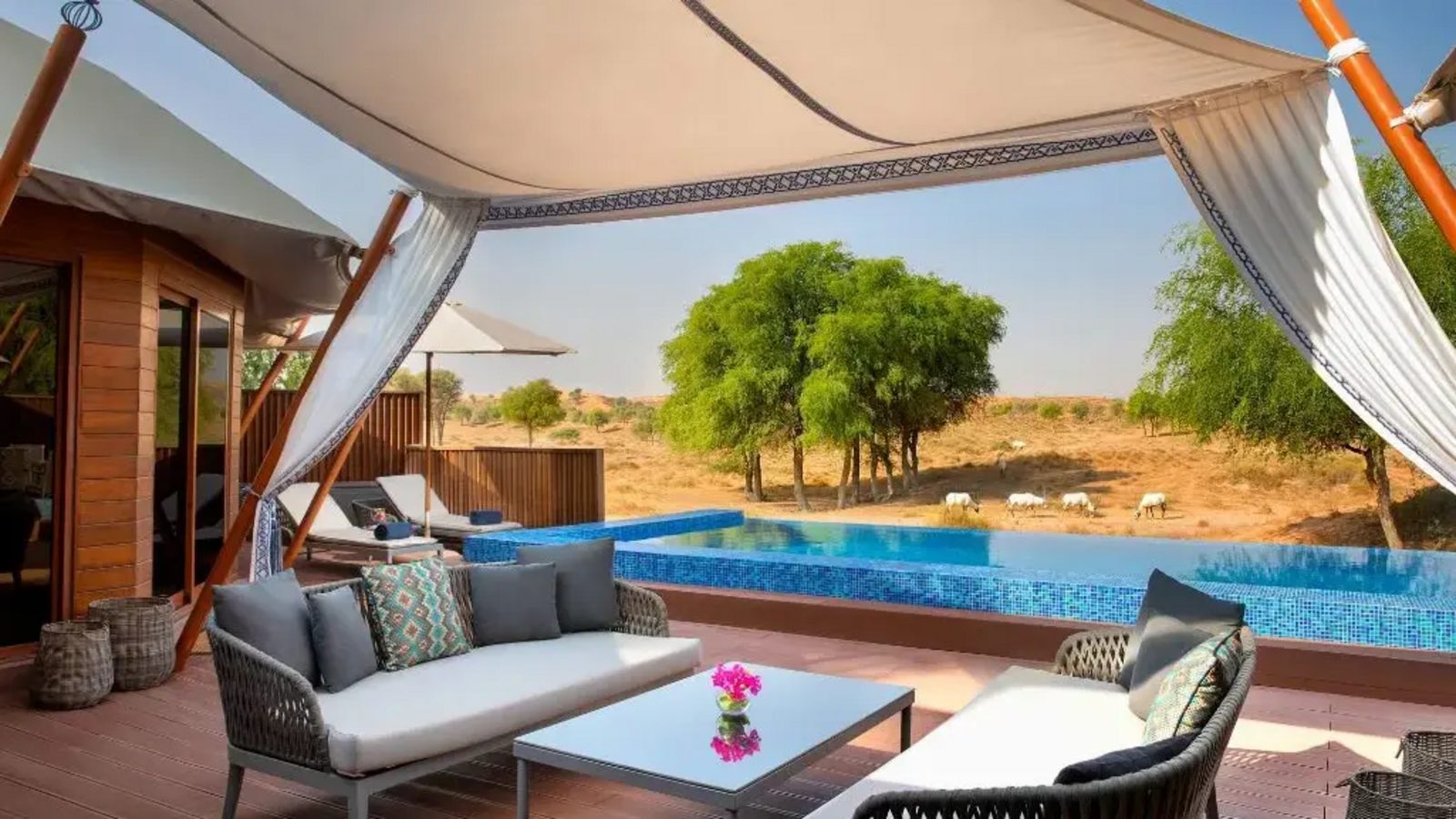
The emirate's existing appeal rests partly on properties like the Ritz-Carlton Ras Al Khaimah, Al Wadi Desert, a resort within a 1,235 acre protected preserve where guests can arrange a desert trek by camel or horse without leaving the property's grounds.
That nature-led positioning stands alongside the harder luxury being added now: casino gaming at Wynn Al Marjan Island, mountain lodging on Jebel Jais, and the culinary and lifestyle weight that Nobu, Janu and Four Seasons carry into any market they enter.
The gap between the two halves of this story is the one RAKTDA has to close. Occupancy at 49.3% and RevPAR down roughly 29% describe a destination with rooms to spare, while the pipeline describes one about to double its inventory and skew it hard toward the top end.
Domestic travel is doing the heavy lifting for now, up 47% while total guest nights fall, and Harrison's own timeline puts a full recovery across the Gulf states no earlier than the first quarter of 2027, with Germany lagging by three further quarters.
For travellers weighing where new luxury capacity in the Gulf is landing next, Ras Al Khaimah's timeline gives a rough order: The Mangroves and Saij Mountain Lodge this year and next, Wynn Al Marjan Island in September 2027, and the Nobu, Janu, Fairmont, W and Four Seasons openings the year after.
Sources
This briefing is published daily using an AI-powered system crafted by Luxa Terra’s team and finely tuned to meet our editorial standards. While we continuously test and review the output, mistakes can sometimes happen. Tell us if you spot one.
Image: Ras Al Khaimah


