
Virgin Atlantic ties its newest Upper Class suite to just three US departure tiers
Which cabin a passenger gets can turn on the flight number, not just the airport, as older jets still cover some of the same routes.
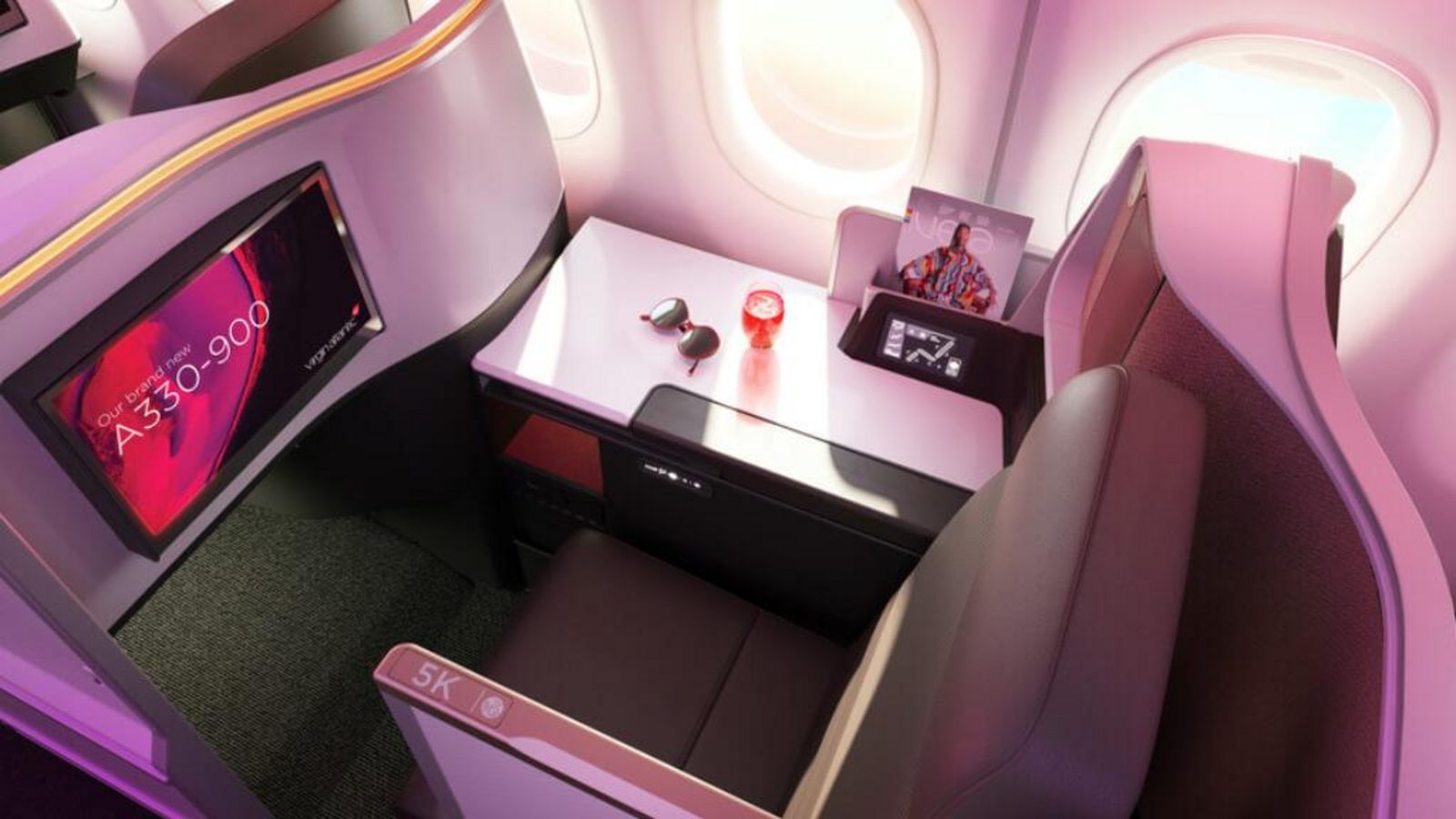

Virgin Atlantic is concentrating its newest Airbus A330-900neo cabins across eight US and leisure transatlantic gateways through March 2027, but the aircraft is not guaranteed on every route it serves. The carrier has effectively split its North American network into three tiers, and only the top one delivers the new suite daily.
Boston Logan and Tampa are in that first tier, each with a reliable daily A330neo service to London Heathrow. Passengers booking those two routes have high confidence of the newest hard product, since demand in both markets lines up closely with the aircraft's 32-suite Upper Class layout.
New York JFK and Miami form the second tier, where A330neo flights share schedules with larger Airbus A350-1000s and Boeing 787-9s. Miami is primarily flown by the A350-1000 rather than dedicated A330neo frames, so a passenger booking that route may not see the newest suite at all.
A third tier covers lower-frequency and seasonal rotations built to capture targeted premium demand rather than daily volume. Washington Dulles gets four A330neo-capable flights a week, on Tuesdays, Wednesdays, Thursdays and Sundays, well short of a daily guarantee.
Seasonal leisure links complete that tier: Atlanta to Manchester on Fridays, Orlando to Heathrow on Saturdays and Orlando to Manchester on Sundays. Virgin Atlantic is also suspending its daily Heathrow to Seattle-Tacoma route entirely for winter, between 25 October 2026 and 27 March 2027.
What the new suite actually offers
The A330neo's standard Upper Class cabin now runs to 48 suites in a 1-2-1 layout, each seat 22 inches wide and folding into a fully flat bed measuring 6 feet 7 inches. Every suite gets a sliding privacy door, passenger-controlled ambient lighting and Qi wireless charging.
Bluetooth audio pairing and a 17.3 inch 4K touchscreen come as standard across the cabin. At the front, two exclusive Retreat Suites occupy the centre pair of row one, giving the largest personal space Virgin Atlantic has offered, with a 27 inch touchscreen apiece.
The Retreat Suite drops the usual footwell for an open ottoman that doubles as a companion seat, letting up to four passengers share dining or a meeting inside one private enclosure. With only two per aircraft, availability on high-demand corporate routes stays tightly restricted.
Virgin Atlantic is already planning around that constraint. Future aircraft deliveries are set to triple the front-row footprint, taking Retreat Suites from two to six per frame, a shift funded by an extensive expansion of premium cabins across the 787 and A330 fleets.
Why the airline is trimming economy seats
To fit the larger premium footprint, Virgin Atlantic is cutting economy seating on the reconfigured jets, doubling down on corporate and premium leisure travellers rather than volume. The A330-900neo already burns 13% less fuel than the retiring A330-300, and Airbus puts the newer jet's per-seat saving at 25% against previous-generation aircraft.
That efficiency is what lets Virgin Atlantic hand over more floor space to suites without inflating the cost per seat mile. The carrier ordered seven additional A330neos in 2024 and is building toward a fleet of 19 of the aircraft by 2028, embedding the denser premium layout across its core network.
Each reconfigured jet is set to carry 104 premium seats, combining Upper Class and premium economy, within a 232-seat total, aimed squarely at capturing peak corporate demand on the North Atlantic. That contrasts with rivals that vary seat density by swapping between aircraft types instead.
United Airlines and Delta Air Lines lean on schedule depth out of hubs including Newark, Chicago O'Hare and Hartsfield-Jackson Atlanta, mixing Boeing 767, 777 and 787 jets with Airbus A330s. A United passenger on one route might get an upgraded Polaris suite one day and an older 767 configuration the next.
Virgin Atlantic's joint venture with Delta divides those roles instead of blending them: Delta supplies frequency and domestic feed, while Virgin Atlantic holds the high-yield slots flown by its newest widebodies on key Heathrow routes, marketing both frequency and consistent product together.
Schedule data cited by AeroRoutes shows how granular the swaps get. On JFK, flight VS137/138 is moving to daily A330neo service in place of the A350-1000, while VS009/010 is switching the other way, to the larger 397-seat A350-1000 replacing the A330neo.
On the Heathrow to Boston route, 787-9s are replacing the A330-900neo on flight VS011/012 for part of the season, splitting the route evenly between the two aircraft types.
The practical upshot is that booking a flight from a named gateway is not enough. A passenger chasing the newest suite needs to check the specific flight number and aircraft assignment rather than assuming any Heathrow-bound departure from a major US city will deliver it.
Support the content you love — it’s free 🎉
Add Luxa Terra as a preferred source on Google. Our stories will be more likely to appear in Google’s Top Stories. It’s free and supports our team. Thank you!
Add as preferred sourceYou can remove us any time in Google’s source preferences.
Thank you — see you in Top Stories 🎉
Luxa Terra is now one of your preferred sources on Google, so our stories are more likely to appear when you search.
Sources
This briefing is published daily using an AI-powered system crafted by Luxa Terra’s team and finely tuned to meet our editorial standards. While we continuously test and review the output, mistakes can sometimes happen. Tell us if you spot one.
Image: Virgin Atlantic


