
Fondation Beyeler opens £109.7m Zumthor expansion in Basel
The Wyss building is made almost entirely from rammed limestone quarried in the nearby Jura Mountains, and Zumthor says it is his first commission in Basel itself.
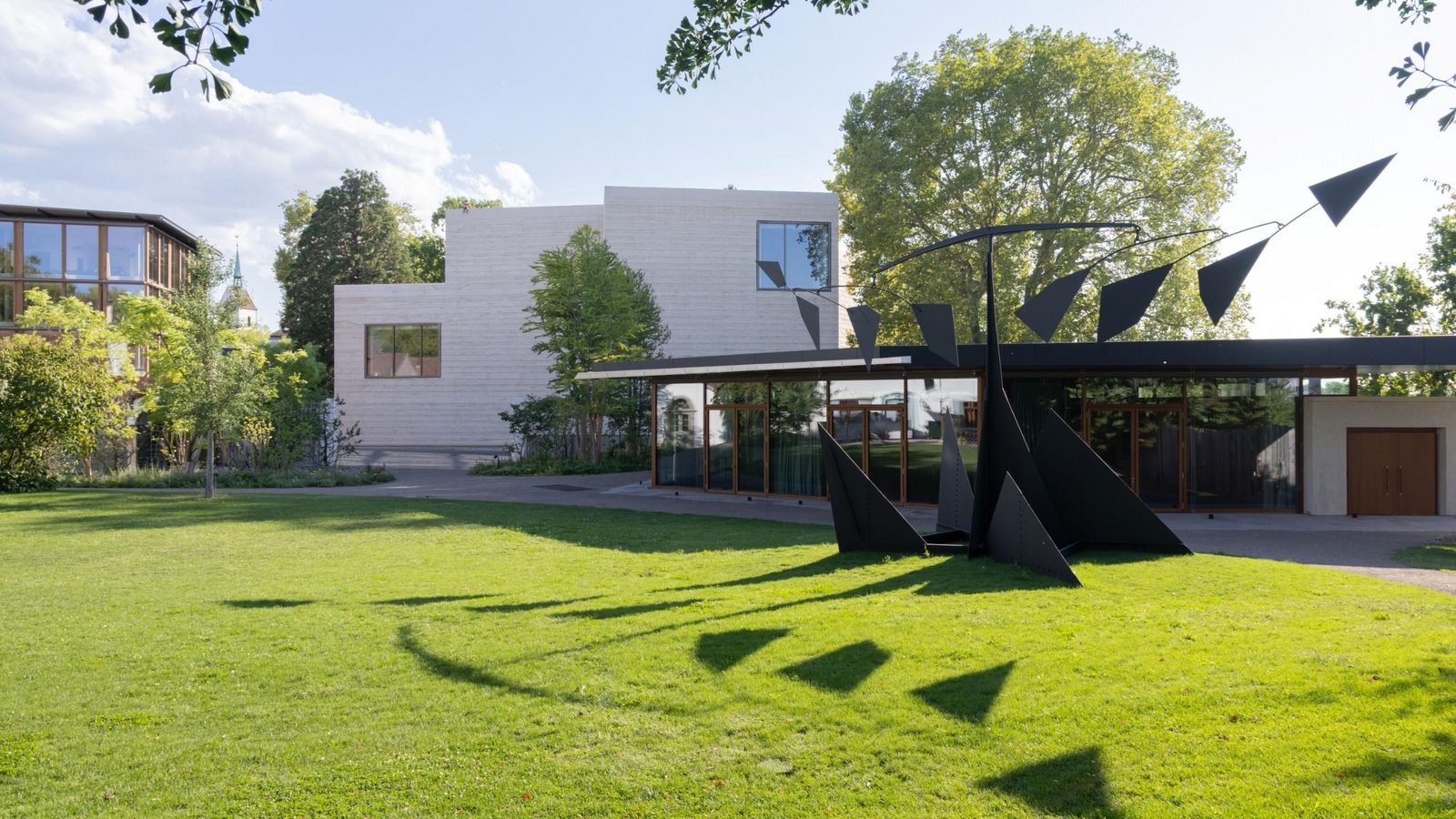

Fondation Beyeler has opened a suite of new buildings in Basel, Switzerland, after an expansion costing around SFr 120m, roughly £109.7m. The museum, known for its collection of Monet, Mondrian and Picasso, commissioned the Swiss architect Peter Zumthor to design three new structures and to rework its grounds.
The centrepiece is the Wyss building, named after the Swiss entrepreneur Hansjörg Wyss, who covered most of its cost. It adds 1,500 square metres of exhibition space, on top of the 3,800 square metres in the existing building by Renzo Piano, which opened in 1997.
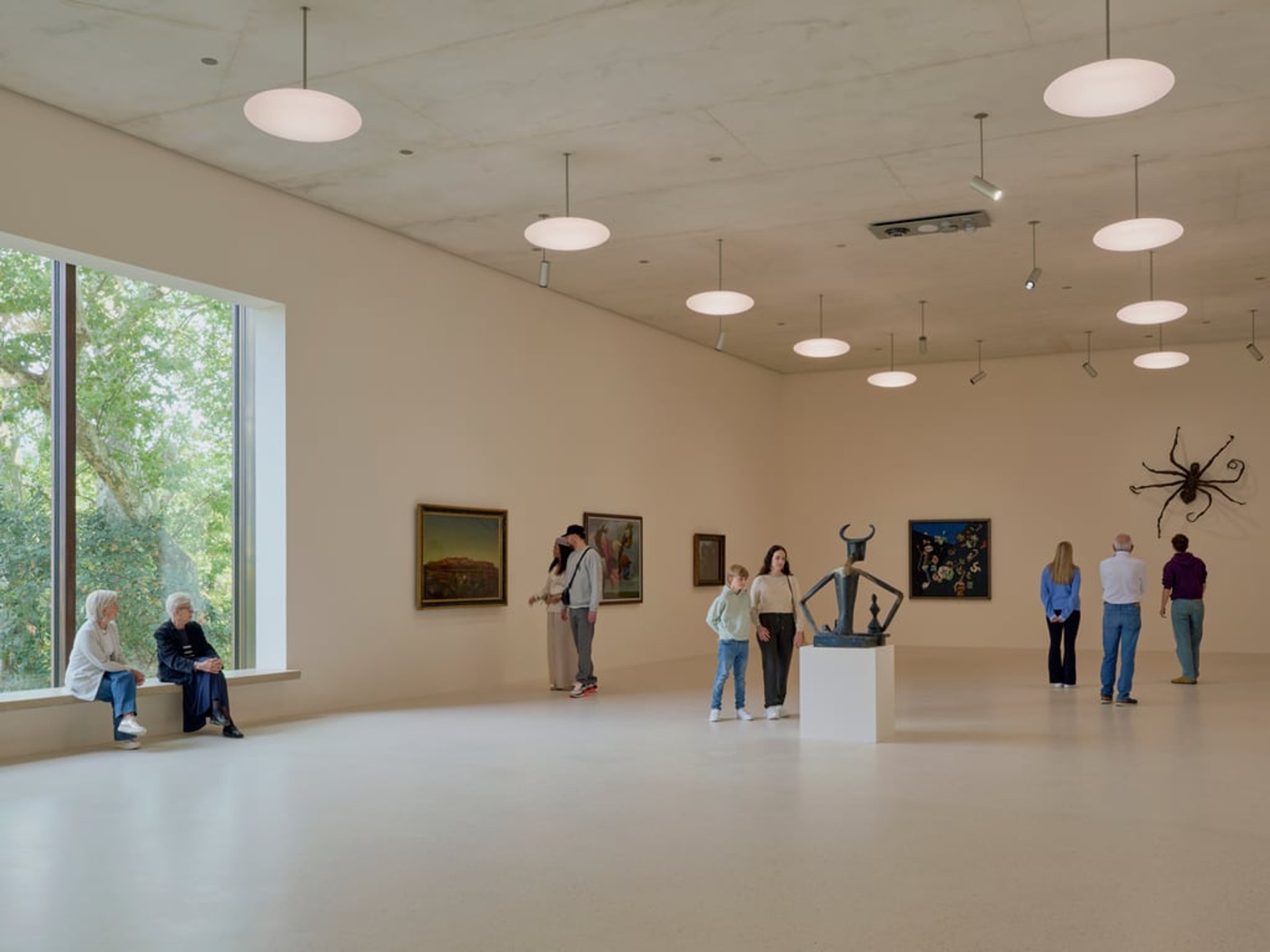
The same structure is being called the Wyss Museum, spread across three flowing, open plan levels made almost entirely from one material: Jura limestone. It appears as rammed walls, as terrazzo floors, as a limestone wash on internal surfaces and as slabs on benches.
Eleven builders spent two years working the limestone, much of it by hand, and Zumthor visited the site repeatedly to check the material's natural variation looked balanced as it was rammed into place. Architectural bronze frames the openings, and pear tree wood makes the door handles.
Zumthor favours horizontal light, so large side windows illuminate the galleries softly while letting the eye wander out towards the Jura Mountains and the fringes of the Black Forest. The building's Y shaped plan was set to preserve the park's centuries old trees.
There is no reception area. Visitors walk straight into the display, which currently mixes works by Monet, Wolfgang Tillmans and Roni Horn on the ground floor. "I like museums that only serve art," Zumthor said of the decision to split the brief into separate buildings rather than one.
The freestanding Ammann Pavilion, named after the Swiss art dealers Thomas and Doris Ammann, is at the campus's heart and takes a similarly tactile approach with timber. Cherry wood lines its floors and walls, pear tree reappears on handles and oak forms the structural frame.
It is wrapped in glazing and furnished with pieces by the Spanish studio Casa Muñoz, and is meant to be the campus's most public facing space, hosting recitals, talks, dinners and private functions for daytime visitors as well as evening audiences.
The third new structure is the Erlen Torhaus, a wooden framed tower added to the original 18th century villa that now houses offices and art handling logistics. An underground connection links it to the Wyss building so artworks can move securely between the two.
What else has changed on the grounds
The surrounding parkland has doubled to nearly 20,000 square metres and now includes newly installed works by Rachel Whiteread, Pierre Huyghe and a towering Maman spider from 1999 by Louise Bourgeois, with the new landscaping funded by Christoph and Sibylla Müller.
The street facing side of the campus has also gained an India Mahdavi designed plant store and greenhouse, built as a cold house for plants as the climate warms, and a listening lounge called the Salon, decorated by Antonio Rossi with a collection of vinyl chosen for its sleeve art.
A new garden section is due next year from the artists Fischli and Weiss, part of what the foundation describes as further plans for a park that was formerly private and is now a public sculpture garden.
A new exhibition called Constellations, running until 5 September 2027, shows 150 modern and contemporary works from the Beyeler collection and affiliated holdings such as the Daros Collection, tracing a route from Piano's original galleries into Zumthor's new ones.
When the campus opens in full
Rather than a big party, the foundation has planned a gradual, low key opening running from 26 September to 14 January 2027, with visitor numbers to paying exhibitions significantly limited and opening days cut from seven to five a week.
"We want to learn from the visitors themselves, to optimise all our processes," said Sam Keller, the museum's director since 2008, describing the reasoning behind the phased approach before the campus opens permanently and at full capacity in January 2027.
Zumthor, who grew up in Oberwil, five kilometres from Basel, said the commission marks his first building in the city itself. "I never got an invitation to," he said of building there before, adding that he still knows the surrounding landscape, its places and its paths.
Support the content you love — it’s free 🎉
Add Luxa Terra as a preferred source on Google. Our stories will be more likely to appear in Google’s Top Stories. It’s free and supports our team. Thank you!
Add as preferred sourceYou can remove us any time in Google’s source preferences.
Thank you — see you in Top Stories 🎉
Luxa Terra is now one of your preferred sources on Google, so our stories are more likely to appear when you search.
Sources
This briefing is published daily using an AI-powered system crafted by Luxa Terra’s team and finely tuned to meet our editorial standards. While we continuously test and review the output, mistakes can sometimes happen. Tell us if you spot one.
Images: Fondation Beyeler; An interior view of the Fondation Beyeler’s new Wyss building Photo: Mark Niedermann


