
Le Cornichon's founders open Le Poisson Volant, a Paris club until 5 am
Chef Yanxin Yin's Chinese menu runs to midnight, with a basement club behind an aquarium and a Shuo Hao commission on the stairs.
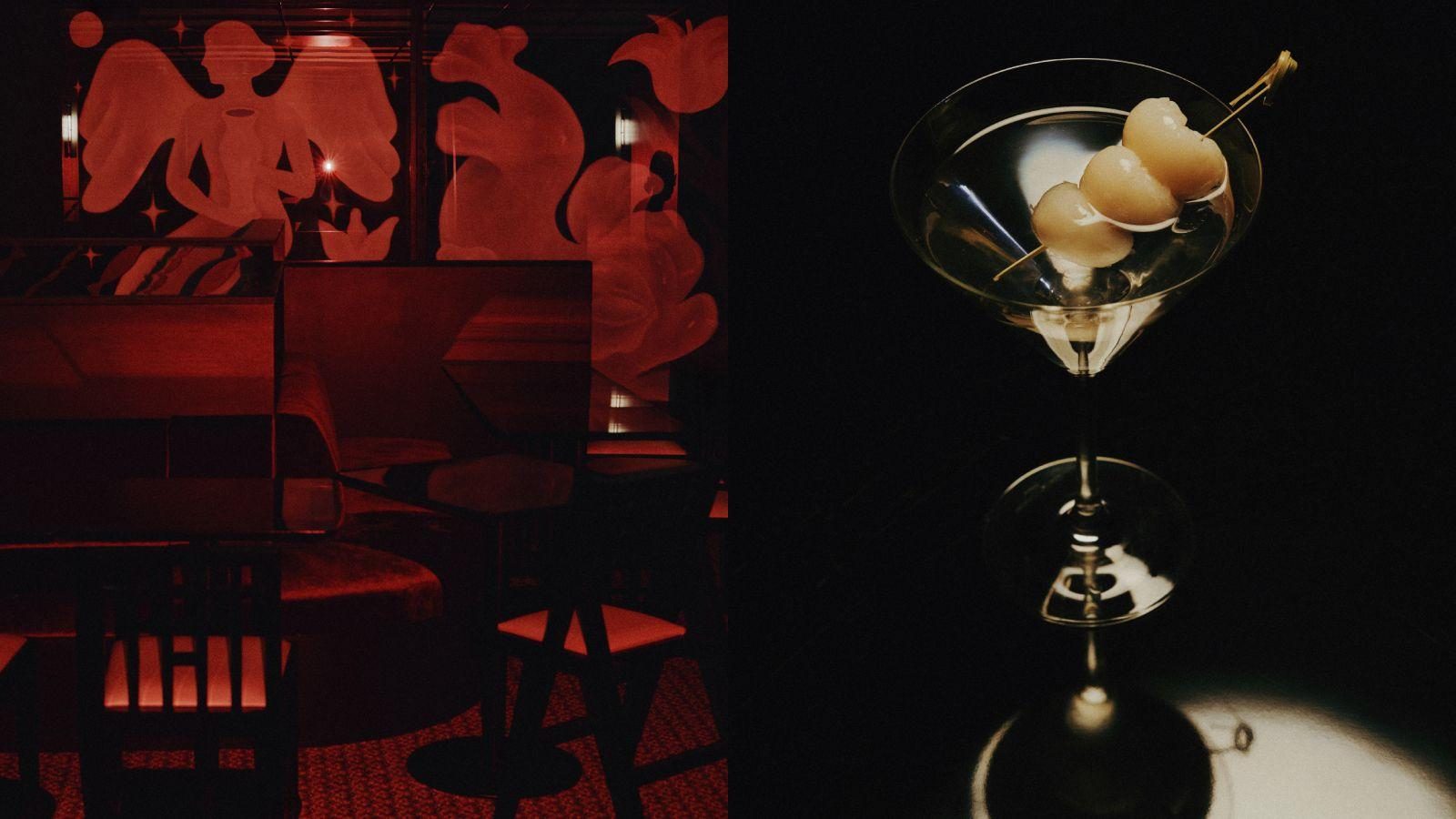

Bertrand Chauveau and Paul Henri, the childhood friends behind Paris café-cum-bistro Le Cornichon, have opened Le Poisson Volant, a restaurant and nightclub in the 11th arrondissement. The address is 5 Rue Marguerite Moret, 75011, the former home of L'International, an established rock and punk venue.
Dinner is served daily from 7 pm to midnight. From Thursday to Saturday, the entire venue then becomes a nightclub until 5 am. The building stands between Oberkampf, Belleville and Ménilmontant, three east Paris neighbourhoods with long nightlife histories of their own.
The pair have reunited with Claves Architecture for interiors that draw on Chinese Art Deco and the nocturnal world of Wong Kar-wai. Claves founders Laure Gravier and Soizic Fougeront reworked the building completely, behind a frontage that recalls a traditional Chinese restaurant.
Why the founders wanted a late-night haunt
The founders say they wanted a place where people could eat late, talk and dance around a table, in surroundings that felt out of the ordinary. They also want the space to evolve with what guests ask of it and to stay a place of freedom, with flexible codes.
Two venues abroad shaped the idea: Brilliant Corners, a Japanese restaurant and listening bar in Dalston, London, known for vinyl DJ sets, and New York's former China Chalet, where a Chinese dining room doubled as a late-night party venue.
Nearer home, they studied the restaurants of Belleville and the 13th arrondissement, where different communities meet over food. One favourite was La Bénédiction, a Chinese restaurant with consistently good cooking and loyal regulars.
The menu and the chef behind it
Chauveau trained at Ferrandi and has worked with Jean-François Piège and David Toutain. He developed the menu with chef Yanxin Yin, who is originally from Tsingtao and studied in Xi'an and Lanzhou, specialising in noodles, dumplings and Peking duck.
Yin previously worked with Bao Family in France. Dishes include pork and chive potstickers, steamed aubergine with chilli and herbs, and braised chicken cooked with vin jaune and black mushrooms, a Jura wine paired with a Chinese braise.
The two cooks' backgrounds meet most clearly in wontons served with pig's trotter and langoustine tartare. It is the dish on the menu where Chauveau's French training and Yin's northern Chinese noodle and dumpling craft are most visibly combined.
How the rooms are built
A new grid of columns and beams defines the spaces, taking cues from Brutalism and the neighbourhood's industrial architecture. Large mirrors repeat those lines and stretch views across the rooms, so the floor reads as larger and more fractured than it is.
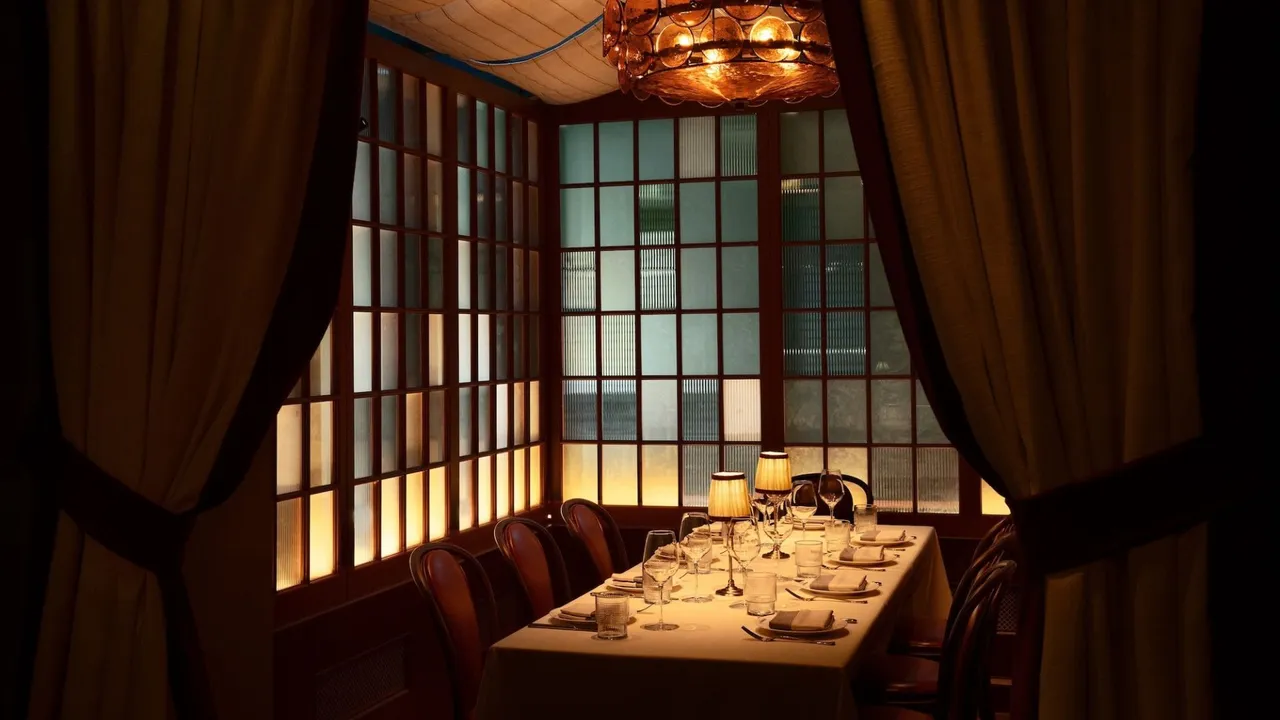
Silver-painted Chinese Art Deco patterns cover the walls and structural elements. High-backed chairs inspired by Charles Rennie Mackintosh add slender verticals to the heavy geometry. At the centre, an oval bar in patinated steel is ringed by purple-brown walls, patterned carpet and hand-painted mirrors.
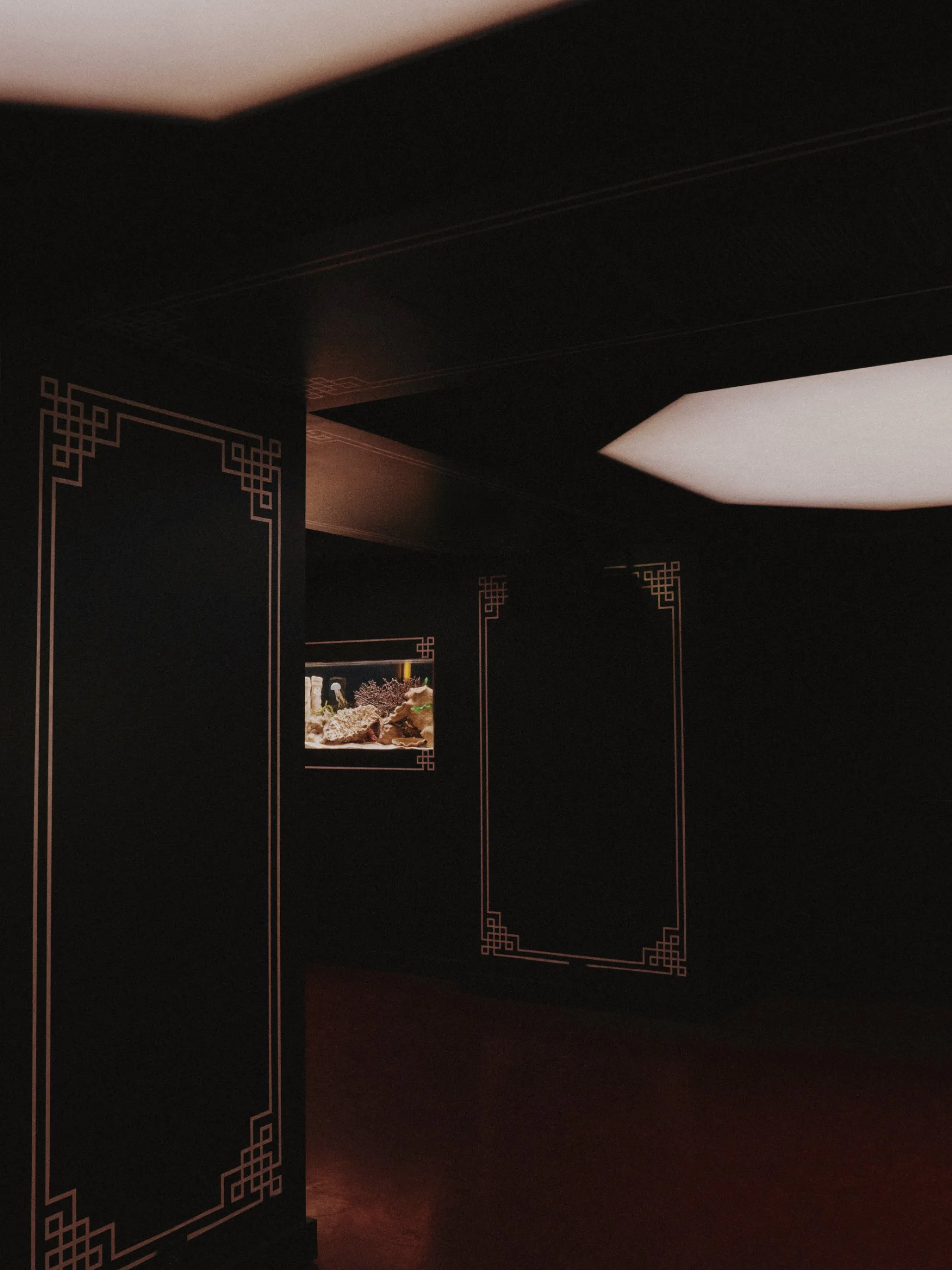
Saturated colour, low lighting and fractured perspectives recall Wong Kar-wai's films. The studio calls the result an imaginary Shanghai by night, tied to no particular era. A work commissioned from Chinese artist Shuo Hao follows the staircase down to the basement club.
Downstairs, an aquarium filled with mineral compositions hides a private room, in the manner of Pierre Huyghe's installations. With no street views, it is easy to lose track of the hour, and reflections and artificial light carry on from the floor above.
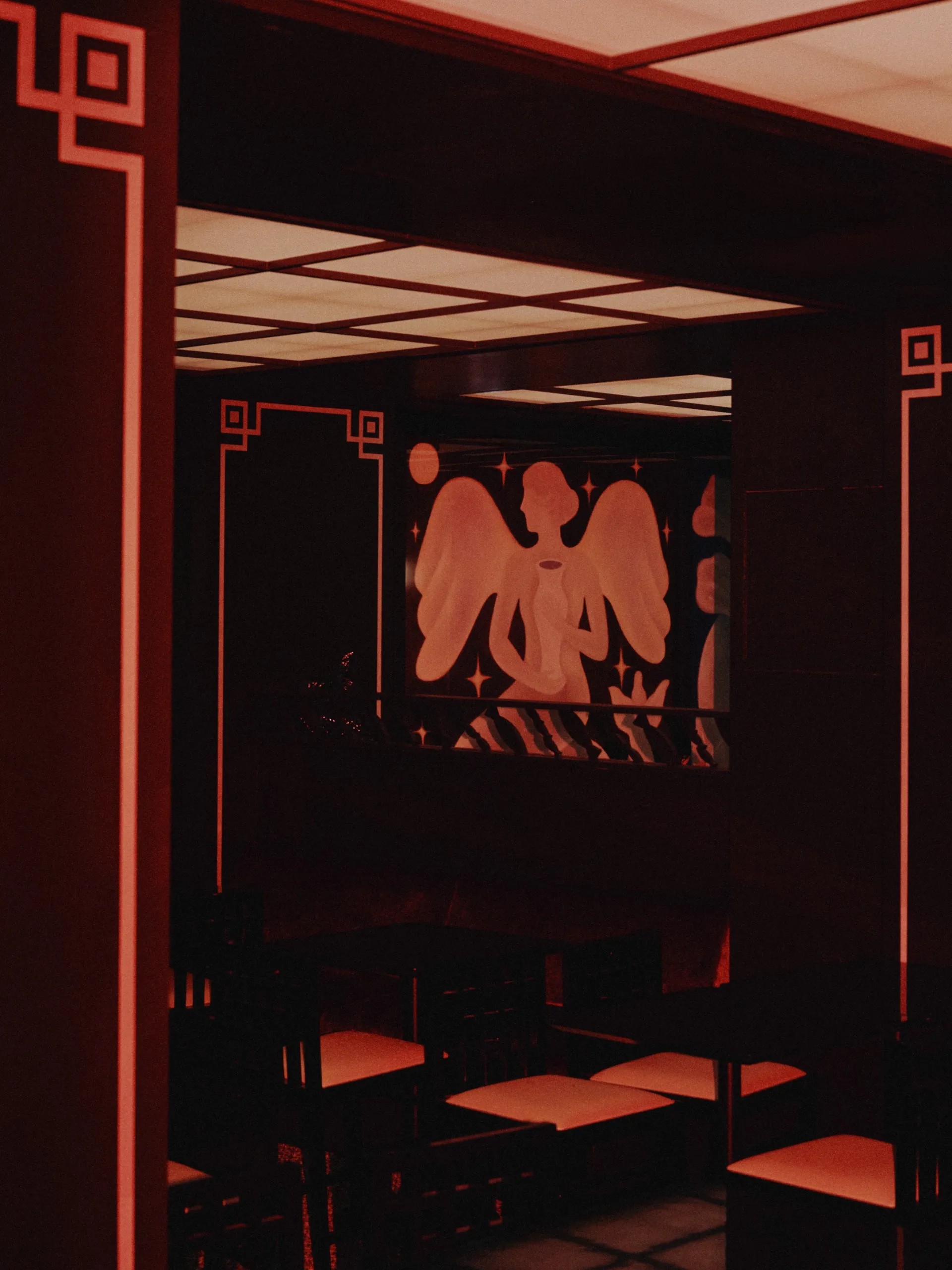
Without natural light, the ceiling becomes a canvas for luminous panels by Matière Noire, set into the architectural grid and backed by concealed lighting. Once dinner gives way to DJ sets, the glow hardens into strobes.
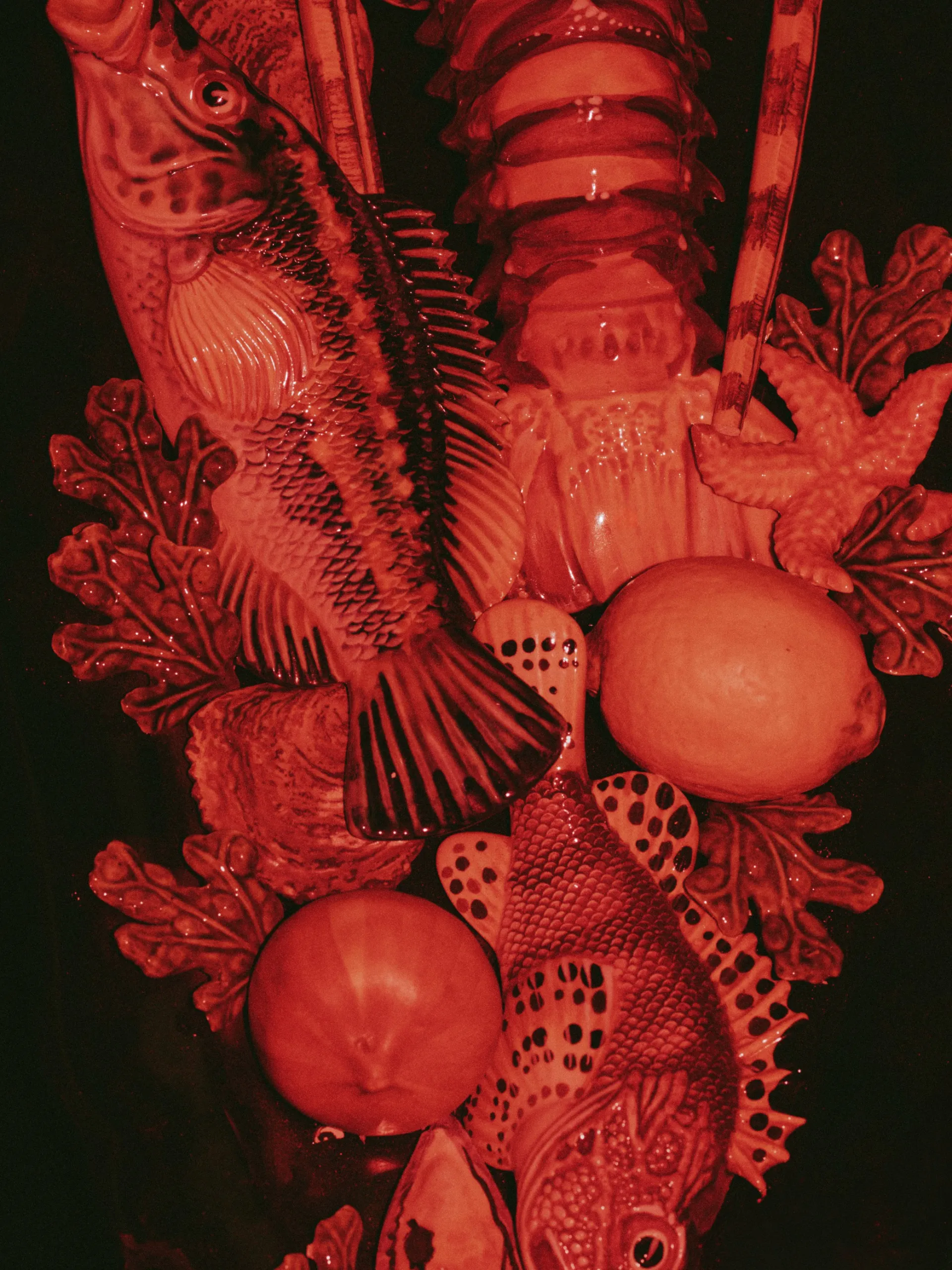
Acoustics were treated as carefully as the lighting, with FLEiK brought in to keep sound quality even across the venue. Chauveau and Henri programme the music themselves, offering residencies to figures from the Paris scene and inviting guest artists and DJs.
Both floors are meant to work as one. In the founders' words, the venue is not inherently a club, but becomes one through how it is used, which is why dinner and dancing share the same rooms.
Support the content you love — it’s free 🎉
Add Luxa Terra as a preferred source on Google. Our stories will be more likely to appear in Google’s Top Stories. It’s free and supports our team. Thank you!
Add as preferred sourceYou can remove us any time in Google’s source preferences.
Thank you — see you in Top Stories 🎉
Luxa Terra is now one of your preferred sources on Google, so our stories are more likely to appear when you search.
This briefing is published daily using an AI-powered system crafted by Luxa Terra’s team and finely tuned to meet our editorial standards. While we continuously test and review the output, mistakes can sometimes happen. Tell us if you spot one.
Images: (Image credit: Photo by F lix Dol Maillot); Le Poisson Volant


